Sunday, December 28, 2014

Red Pine


Red Pine
Pinus resinosa
Red Pine is not really native to Indiana, but there have been a couple of supposed native trees found here, although those must have been an anomaly. This is a more northern tree and the southern edge of its historic range is about halfway down the mitt of Michigan.

On the other hand, this tree has been planted extensively in Indiana and can be quite commonly found all over the place, although I've never seen any young trees that were offspring of planted trees.

It's a nice tree for wildlife, especially in the winter. They provide good shelter for owls. One year I had a long-eared owl spend the winter in some red pines on my property.


Saturday, December 27, 2014

Scots Pine

Scots Pine
Pinus sylvestris
 
Scots Pine is not native to North America, but has been planted widely and can be found all over the place. It was commonly used for Christmas trees, although not so much anymore. You might find stands of older trees that weren't harvested.

It is the only pine native to northern Europe. In Great Britain, it is currently only naturally found in Scotland.

These easiest way to identify this tree is to look at the upper trunk. It will appear reddish with flaky bark. The needles can vary in length with two in a cluster that have a bit of a twist. The cones are small and round.


Note the different lengths of the needles. They come two in a cluster and twist around each other about 180 degrees.


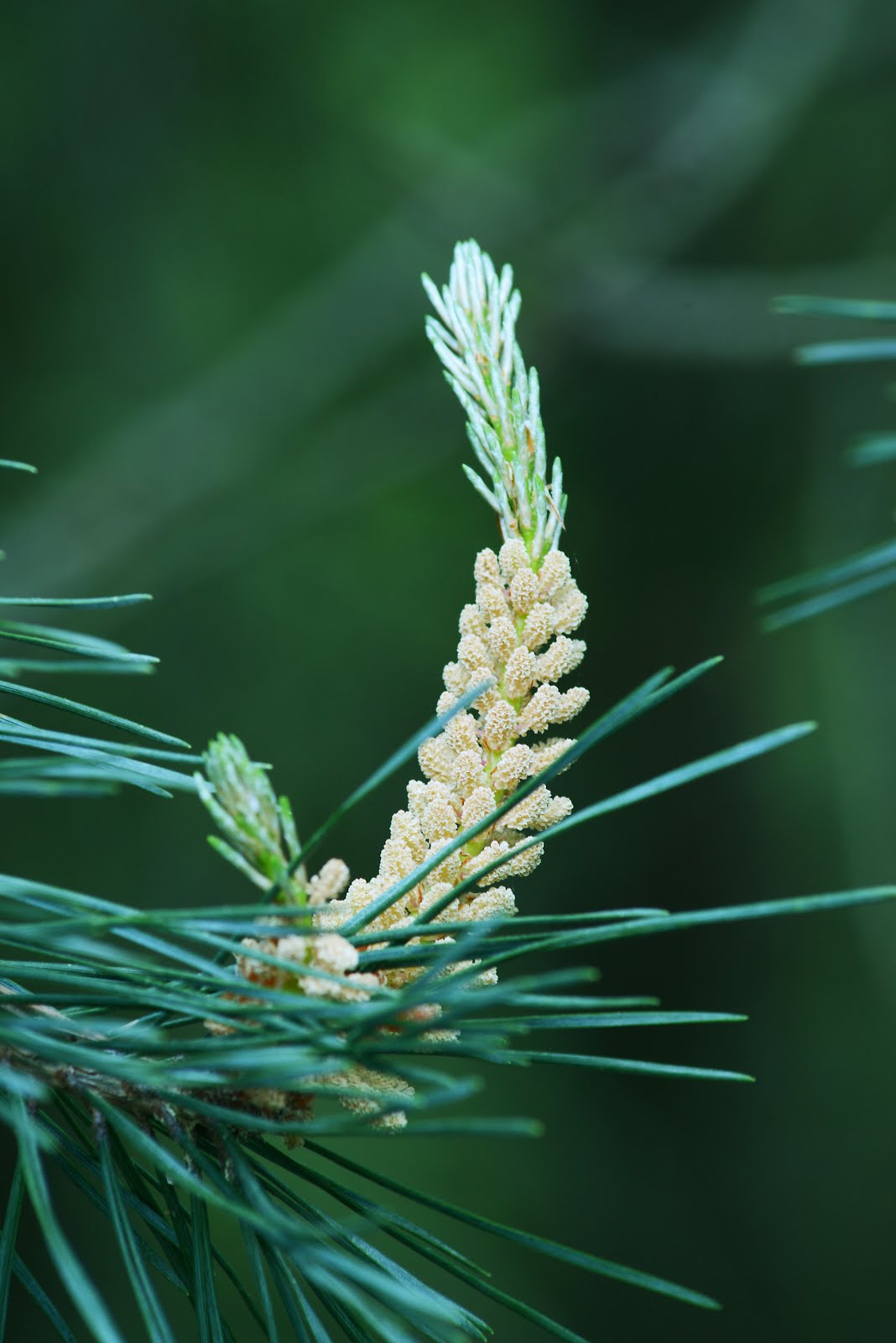
Male flowers
Another male flower


Friday, December 26, 2014

Eastern White Pine


Eastern White Pine
Pinus strobus
I think it's always good to learn about wild edibles, never knowing when you'll have to fend for yourself. White Pine trees have been planted all over the place and so when someone told me they were edible, I thought I'd give it a try.  Basically all you do is boil the needles to make some tea.  It didn't really fill me up, but it was a pleasant tasting tea packed full of vitamins A and C.  Feeling healthy and proud of myself, I cooked up a bacon-wrapped pork loin to go with it. :-)

Eastern White Pine is only native to the very northwest part of the state and was not too common. However, it has been planted extensively all over the state, pushed by the Soil Conservation Service and then the Soil & Water Conservation Districts in the state as great trees for wind breaks and re-foresting areas.  There are jillions of them all over the place now.

They're not hard to identify, the needles in groups of five, softer feeling to the grasp than other pine species.


Needles in whorls of five
Some of the needles turn yellow and fall off every year